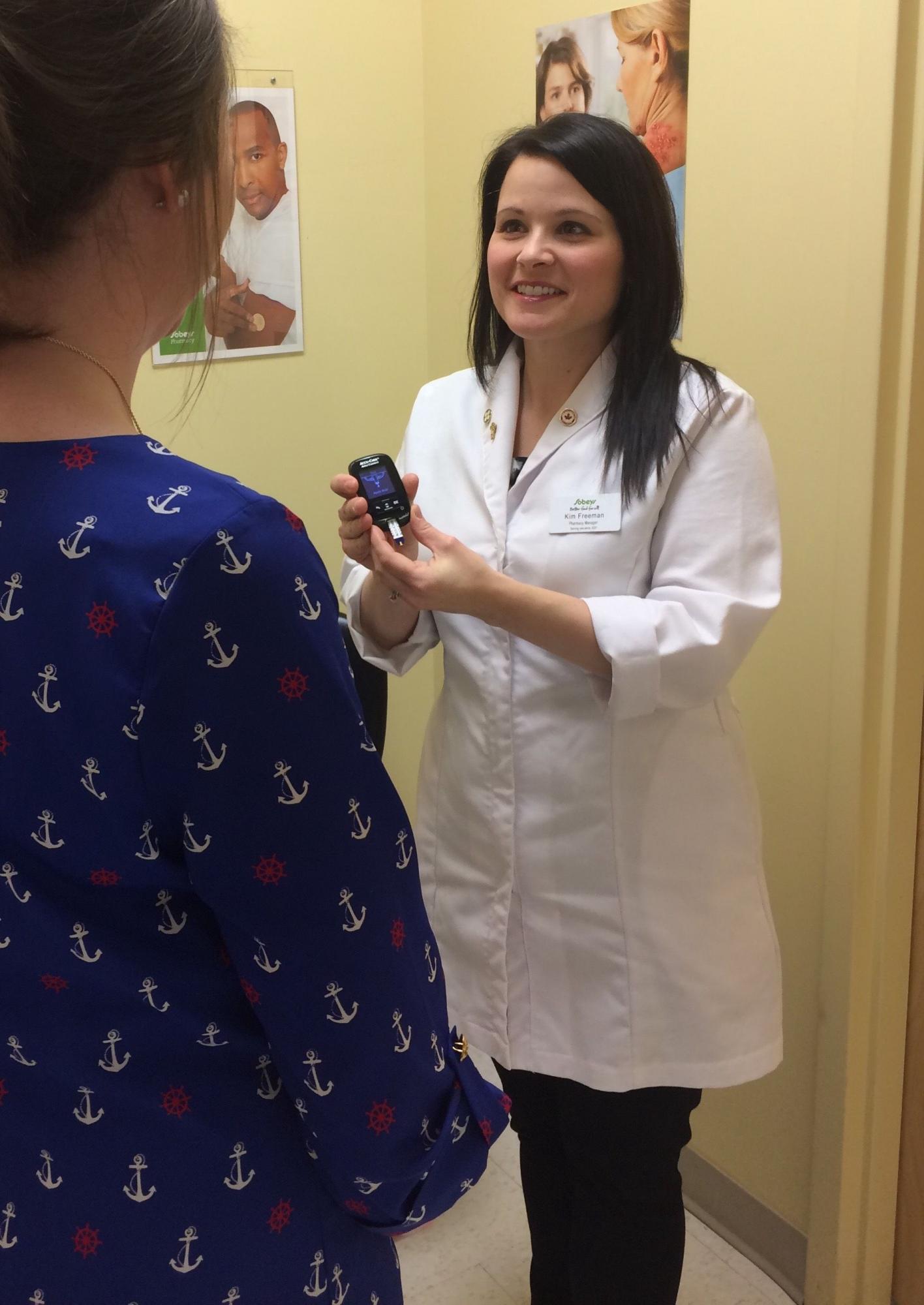
Pharmacist Kim Freeman cannot remember not wanting to be a pharmacist.
“I didn’t want to be a doctor or nurse but I wanted to be in health care,” she says. “I wanted to help people.” Nobody in her family was in health care, although her sister would go on to be a nurse.
There was nothing going to stop Kim from achieving her dream. Her daughter was only two weeks old when Kim started university and was two years old when she got accepted into Dalhousie’s College of Pharmacy so she learned to juggle responsibilities early. Graduating in 2001, Kim was in the first class that graduated under the College’s Problem Based Learning Curriculum. At that time, there was a lot of talk about the future of pharmacy and the ways in which pharmacists could contribute to the health care system. It wasn’t until almost ten years later that pharmacists were given more authorities, such as the authority to assess and prescribe for minor ailments.
“It seemed unattainable at the time,” says Kim.
As Kim has progressed through her career she has sought opportunities to learn and gain more expertise. She recently became a Certified Diabetes Educator. She has found that many of her patients went to the Diabetes Clinic when they were intitally diagnosed but there were gaps in their knowledge. When a patient is first diagnosed with diabetes they receive an immense amount of information all at once. It is not possible to retain all of that information. This has led to Kim providing one-on-one sessions with her patients to ensure that they have the tools and information they need to manage their condition.
Kim has also partnered with a dietician to conduct information sessions on managing diabetes and living healthier lives.
“The feedback has been fantastic,” says Kim. “People have come up to me and said that they have learned so much.”
Patients are not the only people in which Kim helps educate. She also welcomes pharmacy students at the pharmacy she manages.
Additionally, Kim is part of a program to educate doctors on the interchangeability of medications.
“A lot of doctors prefer to be brand only,” says Kim. “But those cost more and the patient would potentially go without treatment.” There are many non-brand options that are more economical for patients and at the same time provide the same therapeutic benefits.
Kim also holds sessions for her pharmacist colleagues on how to educate their patients and physicians about medications. It is important, she says, that pharmacists have all the correct information and believe the evidence so they can have informed conversations with their patients and with doctors. These session help build pharmacists’ confidence.
“Most people will switch from a brand drug to a generic drug and never notice,” says Kim.
It is diabetes education, though, were Kim’s true passion lies. No day is ever the same, she says. She has worked at the same pharmacy for 16 years, working her way up to pharmacy manager, and has really gotten to know her patients. She says they are very comfortable talking to her about anything, including her hair.
“If I change my hair colour they notice,” Kim laughs. “And they will tell me if they like it or not. They’re that comfortable.”
There are many things Kim loves about being a pharmacist but the thing she loves most is being a Certified Diabetes Educator. Her mother has diabetes, which has probably also fueled her interest but, she notes, there are so many people who suffer with this condition and really need help. Plus, this is a time of great change in the treatment of diabetes. There are many great studies being conducted. The treatment guidelines changed twice last year alone.
Kim enjoys educating herself about the condition and educating her patients.
More and more private insurance plans are staring to provide coverage for Chronic Disease Management Service for conditions such as diabetes. This excites Kim because she hates asking people for money.
“I don’t know what it is. Maybe it’s because of the way I was raised,” she says. However, she has found that people are quite willing to pay for her consultation services because they value her expertise. She helps her patients with a number of diabetes related conditions such as high blood pressure and nerve pain.
Kim’s dream is for her pharmacy to become a diabetes education centre, much like some pharmacies now have travel clinics, where she can fill her days providing one-on-one consultations and holding education sessions and classes. She has already recruited a co-worker who is currently going through the education process to become a Certified Diabetes Educator.
Kim says, “My true love is diabetes education and helping my patients. They are like family.”